Syndicated Feeds and Community Visual Collections Converge in Regulated Online Environments
Viktor Coleman · Jun 2, 2026
Syndicated Feeds and Community Visual Collections Converge in Regulated Online Environments
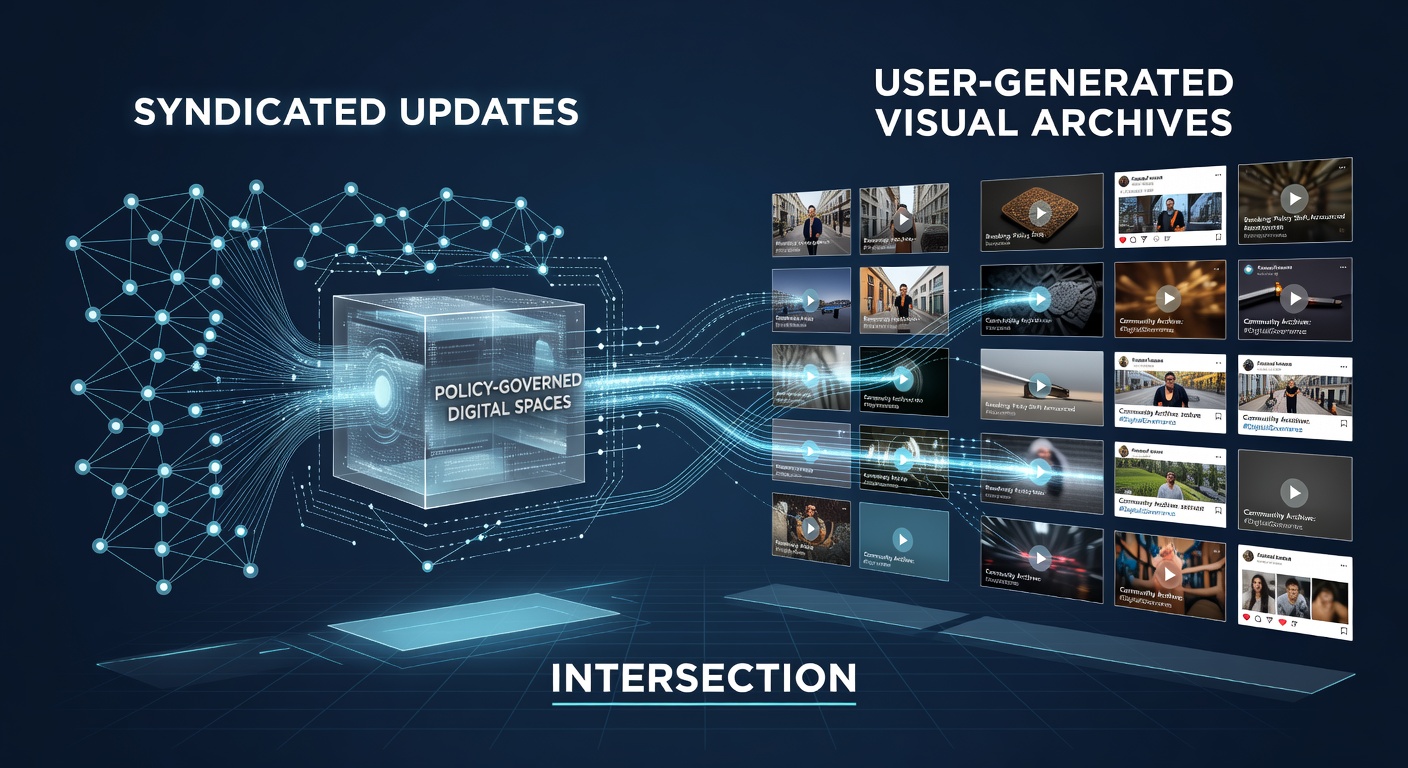
Digital platforms continue to blend automated content distribution systems with archives built from user contributions, creating complex operational layers shaped by evolving regulations. Syndicated updates, delivered through protocols such as RSS, push fresh material from multiple sources into centralized streams while user-generated visual archives accumulate photographs, videos, and graphics submitted directly by participants. These two streams meet at points where automated aggregation meets manual uploads, producing hybrid repositories that platforms must manage according to legal requirements on data protection, intellectual property, and content moderation.
Core Elements of Syndicated Updates
Syndicated updates operate by pulling structured data from originating sites and redistributing it across networks without manual intervention each time new material appears. Researchers at institutions including the University of Amsterdam have documented how these feeds maintain consistent formatting that allows rapid indexing and display on aggregator sites. Observers note that the process relies on standardized metadata tags, which help platforms categorize incoming items quickly yet also expose them to scrutiny when policies demand verification of source accuracy or rights clearance. In practice, a feed might carry headlines and summaries from news outlets alongside embedded links, setting the stage for integration with visual materials that arrive separately through direct user actions.
Structure of User-Generated Visual Archives
User-generated visual archives grow through repeated contributions of images and videos that individuals upload under platform-specific terms. Data from the Australian eSafety Commissioner indicates steady increases in such uploads across major services, with metadata often attached at the point of submission to record timestamps, device information, and contributor identifiers. These archives function as living collections that expand organically, yet they require ongoing oversight to align with rules governing consent, age restrictions, and removal requests. When combined with syndicated streams, the resulting ecosystem allows a single interface to present both externally refreshed items and community-sourced visuals, raising questions about attribution and version control that administrators address through layered policy frameworks.
Policy Frameworks Governing the Intersection
Regulatory standards influence how platforms handle the overlap between automated feeds and contributed visuals. The European Union's approach, detailed through official documentation on the Digital Services Act, requires clear mechanisms for notifying users about automated versus human-curated content. Canadian authorities have similarly outlined expectations under the Online Harms framework that address both syndicated material and user uploads in unified moderation pipelines. These rules compel platforms to maintain audit trails that distinguish between items arriving via feeds and those submitted directly, ensuring consistent application of takedown procedures across both categories. Observers note that such requirements become especially relevant when visual content carries embedded location data or identifiable faces that trigger additional privacy obligations.
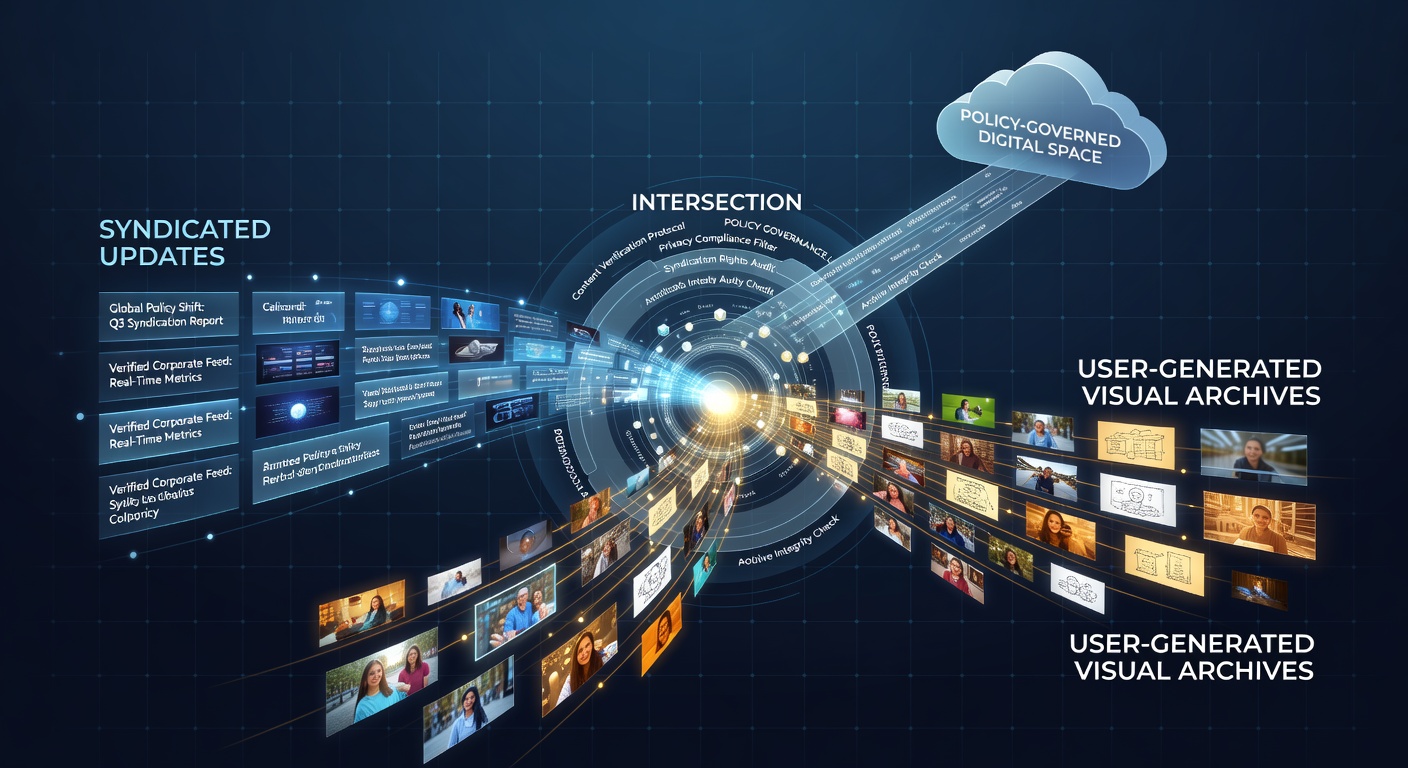
Technical implementations often involve tagging systems that label content origins at ingestion. This allows compliance teams to apply differentiated review processes: syndicated items may undergo source-level checks while individual uploads receive per-item screening. Industry reports from the Interactive Digital Software Association highlight how gaming-adjacent platforms have adopted similar tagging to streamline rights management, though the same techniques appear across news, education, and social domains. The approach reduces duplication of effort while preserving the ability to respond to jurisdiction-specific demands that differ between regions.
Operational Challenges in June 2026 Context
By June 2026, several jurisdictions plan phased rollouts of updated transparency obligations that directly affect combined feed-and-archive systems. Platforms must then publish periodic summaries detailing how many syndicated items versus user uploads underwent automated filtering. Academic analyses from the Berkman Klein Center at Harvard University suggest these disclosures will require refined logging infrastructure capable of separating the two streams without disrupting user experience. Administrators face the added task of ensuring that removal requests originating from visual archive contributors do not inadvertently affect linked syndicated references that point back to the same underlying assets.
Cross-border considerations add further complexity. A visual uploaded under one country's rules may appear in a syndicated feed visible in another jurisdiction with stricter standards. Organizations such as the Asia-Pacific Economic Cooperation have issued guidance on data localization that encourages platforms to segment archives geographically while still allowing feeds to operate globally. This segmentation helps maintain compliance yet demands careful coordination between content origin tracking and distribution logic.
Technical Integration Methods
Developers achieve integration through application programming interfaces that normalize both feed entries and uploaded files into common schemas. Metadata enrichment occurs at multiple stages, appending policy-relevant flags such as license type or review status. When these enriched records enter search indexes, users encounter unified result sets that mix syndicated and contributed visuals without visible seams. Studies published by the MIT Center for Civic Media demonstrate that such unification improves discoverability while simultaneously increasing the volume of items requiring policy review before public display.
Automated monitoring tools scan new arrivals from both sources against evolving keyword lists and image-recognition models. The output feeds into human review queues prioritized by risk scores derived from policy parameters. This workflow allows platforms to scale operations without proportional increases in staffing, though it depends on continuous calibration of detection algorithms to avoid over- or under-flagging.
Conclusion
The convergence of syndicated updates and user-generated visual archives within policy-governed digital spaces produces environments where automated distribution and manual contribution coexist under shared regulatory expectations. Documentation from multiple governmental and academic sources shows that successful management hinges on precise origin tracking, differentiated review processes, and infrastructure capable of supporting forthcoming transparency mandates. As platforms adapt to requirements scheduled for mid-2026, the emphasis remains on maintaining functional separation between feed-driven and archive-driven content while presenting users with coherent, compliant experiences.